

 Français
 中文简体
中文简体 Español
When Engine Parts Are Machined From Solid Metal
Author: Zhengji
Date: Mar 25, 2026
Understanding Billet Construction
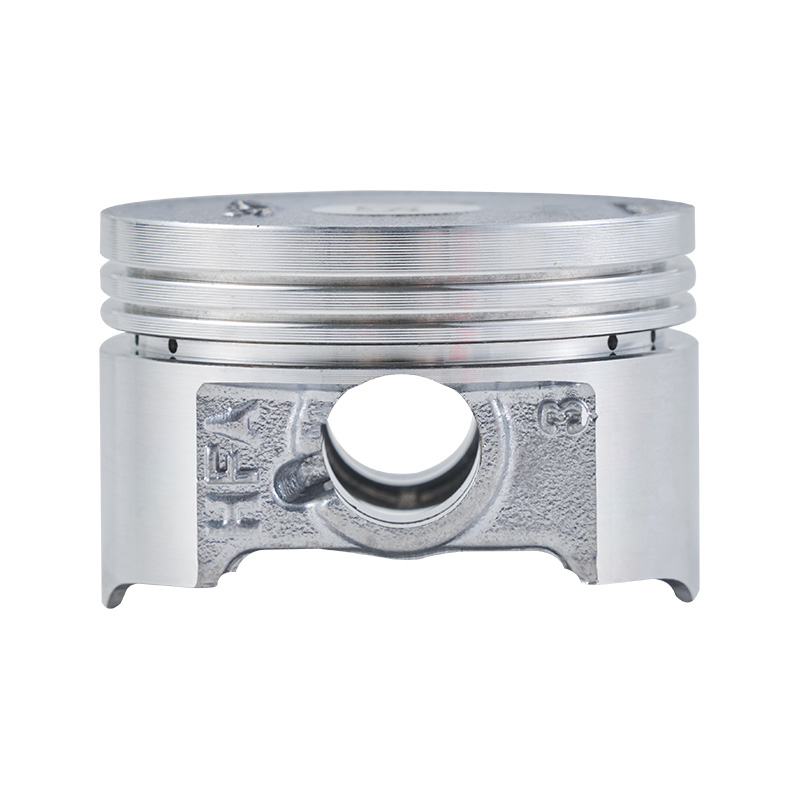
Most engine pistons start as castings or forgings shaped close to final form before machining. A CNC billet piston begins as solid bar stock with every bit of material machined away to create the final shape. This subtractive process requires far more raw material and machining time than conventional methods, but delivers advantages that justify the cost for certain applications. Racing engines, high-performance builds, and specialized industrial equipment often rely on these pistons for their superior material properties and design flexibility.
Raw Material Selection for Strength
Billet production starts with extruded or rolled aluminum bar stock meeting strict specifications. Premium alloys like 2618 and 4032 offer different characteristics suited to specific applications. 2618 provides excellent high-temperature strength for forced induction and nitrous applications where heat loads stress components severely. 4032 offers superior wear resistance with lower thermal expansion for naturally aspirated engines requiring tight clearances. A quality CNC billet piston begins with material certification ensuring composition matches requirements for each specific engine application.
CNC Machining Capabilities Required
Creating pistons from solid billet demands machining centers capable of complex operations with exceptional precision. Five-axis CNC machines position cutting tools at compound angles, creating intricate features impossible with conventional equipment. High-speed spindles remove material efficiently while maintaining surface finishes measured in microns. Automated tool changers swap between dozens of cutters during each cycle. A well-equipped facility producing CNC billet piston components represents substantial capital investment in advanced manufacturing technology.
Design Freedom Benefits
Billet construction liberates designers from constraints imposed by casting or forging processes. Cooling passages follow optimal paths rather than draft-angle limitations. Wrist pin bosses position exactly where engineers want rather than where molds allow. Valve pocket depths accommodate extreme lift profiles without interference. This freedom allows a CNC billet piston design to achieve performance targets impossible with conventional manufacturing methods.
Weight Optimization Possibilities
Removing unnecessary mass from reciprocating components improves engine response and reduces bearing loads. Billet machining removes material precisely where stress analysis indicates excess. Complex under-crown structures maintain strength while shedding grams from critical areas. Lightening pockets between pin bosses reduce mass without compromising wrist pin support. A carefully engineered CNC billet piston achieves minimum weight consistent with durability requirements for specific applications.
Surface Finish Control
Machined surfaces from billet stock achieve exceptional smoothness benefiting engine operation. Cylinder wall contact areas receive finishes optimized for oil film retention and friction reduction. Ring groove surfaces provide ideal sealing against compression loss. Skirt profiles match cylinder bore geometry precisely for uniform loading. A precision-machined CNC billet piston delivers surface characteristics enhancing performance throughout operating range.
Coating Application Compatibility
Billet pistons accept various coating technologies readily due to clean machined surfaces. Thermal barrier coatings on crowns protect base material from combustion heat. Anti-friction skirt coatings reduce drag and scuff risk during cold starts. Dry film lubricants on ring lands prevent micro-welding during momentary lubrication interruptions. A properly prepared CNC billet piston provides ideal substrate for these performance-enhancing treatments.
Small Batch Production Economics
Unlike casting requiring expensive tooling amortized across thousands of units, billet machining suits small production runs economically. Custom piston sets for unique engine combinations become feasible without massive upfront investment. Prototype development cycles shorten dramatically when design changes require only software updates rather than new tooling. A flexible CNC billet piston manufacturing approach serves low-volume applications that could never support conventional production methods.
Quality Verification Requirements
Every billet piston typically receives individual inspection ensuring dimensional accuracy. Coordinate measuring machines verify critical features against design specifications. Surface profilometers confirm finish meets requirements. Weight matching ensures balanced sets for smooth engine operation. A thorough CNC billet piston quality program includes complete documentation traceable to each individual component.
Related products

Ruian Zhengji Motorcycle Parts Co., Ltd. is a specialist piston manufacturer focused on global exports, as well as a provider of professional engine solutions. The company exports over 10 million pistons annually, offering OEM/ODM contract manufacturing and private-label services, with products covering three major sectors: automotive, motorcycles and outboard motors.
WeChat

© Ruian Zhengji Motorcycle Parts Co., Ltd.
OEM Motorcycle Parts Manufacturer
